Warhounds Veterans Guide
Treat the ten unique veterans like irreplaceable campaign assets.
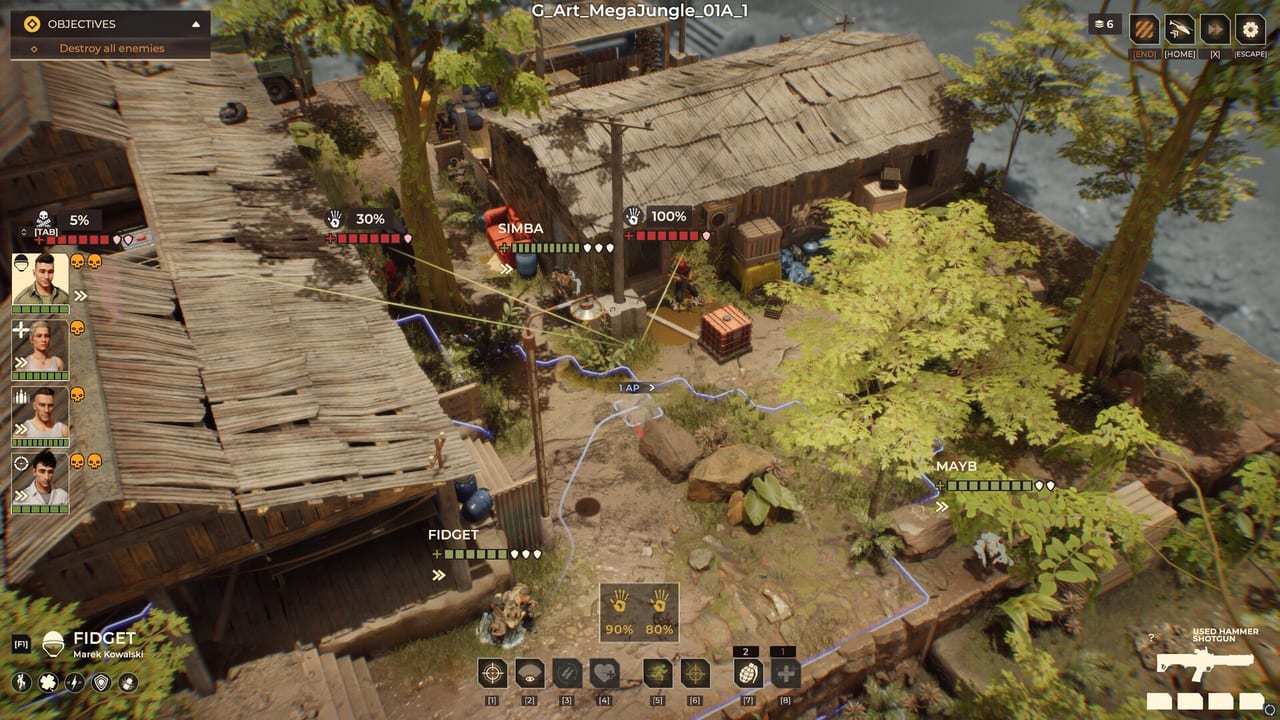
Warhounds advertises ten unique veterans with their own traits, stories, abilities, and voiced presence, backed by a wider pool of customizable recruits. This page explains how to prioritize those veterans in the single-player campaign without spoiling every biographical beat. It complements classes overview and recruitment, and it should be read beside the class tier list when a trait argues against the generic meta.
Veterans are not merely stronger starters. They are narrative anchors and mechanical spikes. Losing one to a lazy peek hurts twice: once in firepower, once in the war room’s morale and continuity.
How to evaluate a veteran quickly
When a veteran becomes available or returns from medical, ask four questions:
- Which class skeleton do they wear? Assault, Specialist, Sniper, Machine Gunner, or Grenadier.
- What does their trait change about risk? Safer scouting, harder hits, better utility, stronger leadership aura—whatever the card implies.
- Are they replaceable this week? If the answer is no, they are not your door-kicker on a low-value side contract.
- Does their gear slot multiply the trait? Camo on a stealth-leaning veteran, scanners on a intel-leaning Specialist, and so on.
If you cannot answer question three, bench them and send a recruit. That discipline is the real veteran guide.
Early campaign veteran policy
Early missions teach ballistics and map reading. Use one or two veterans as teachers—reliable deployers who can clutch—while generics learn the cheap lessons. Do not field your entire legendary cast for a milk-run raid on a supply truck.
Spend early credits on the weapons and gadgets that keep veterans alive: a trustworthy rifle, smoke, scanners. See weapon tier list and gadget tier list. A veteran with a starter popgun is a story character wearing a target.
Mid campaign veteran policy
By mid campaign, faction relationships and covert ops start unlocking nicer toys. This is when veterans should receive the first exo, the first premium optic, or the first optical camo. Generics can inherit last season’s rifles.
Also begin role locking: one veteran becomes extract insurance, one becomes breach lead, one becomes intel lead. Role lock prevents you from improvising a Sniper into a suicidal Assault because the UI made the deploy slot glow.
Injury, downtime, and ego
The base layer includes medical care and downtime. Veterans often feel “too important to rest,” which is how important people die. If a veteran is limping, put them in the common room with whatever the game allows—coffee, cigarettes, bad jokes—and let a recruit take the next messy alley fight.
Build a bench that can cover each veteran’s class for at least one mission. Recruitment guidance on recruitment exists for this exact failure mode.
Trait-first deployment examples
Without naming every spoiler-heavy biography, think in archetypes:
- Aggressive assault veterans: deploy when you already have scanner info; do not use them to open fog.
- Intel or specialist veterans: deploy whenever the map is unknown or the contract hinges on an objective timer.
- Long-range veterans: deploy on airstrips, deserts, and boulevard maps; skip them for crawlspace warehouses.
- Heavy lane veterans: deploy for defense, escort, and extract holds.
- Demolition veterans: deploy against fortified compounds and nested machine-gun architecture.
If a veteran’s trait screams one archetype, stop forcing them into another because a tier list said a different class is “S.” Tier lists are opinions; traits are rules.
Squad chemistry and voiced personality
Warhounds sells old-school action vibes and mercenaries with personality. That flavor matters for enjoyment, and it can matter for readability—operators who call out threats help you notice cones you might ignore. Still, do not keep a toxic roster fantasy if two favorites share the exact same lane role and leave you blind on utility.
A healthy late-mid roster often looks like: three to five heavily invested veterans, a couple of mid-investment specialists, and a rotating farm of recruits. The exact count depends on how brutal your difficulty settings are.
Loadout priority for veterans
Use this checklist before a high-stakes contract:
- Primary weapon is at least A-tier for their role
- One concealment or smoke plan exists if they must cross open ground
- Specialist intel is present on the squad even if the veteran is not the Specialist
- Medical plan exists if they are the irreplaceable story piece
- Bench cover exists if they return injured
Convert the checklist into a full packing list via squad loadouts and class builds.
When to bench a favorite
Bench a veteran when:
- They are injured or exhausted.
- The map denies their trait (Sniper with no sight lines, Grenadier with fragile objectives).
- You are testing a new mechanic and do not want a permanent scar on a campaign pillar.
- Two veterans overlap so hard that a recruit Specialist would add more value.
Favoritism is how campaigns become restart screens.
Story caution
This wiki avoids dumping full veteran dossiers. Enjoy their base scenes and mission chatter in-game. Mechanically, treat them as high-value pieces in a lethal tactics sandbox set against Daamat’s rise in 2035 East Africa. Your job as commander is to make sure their story continues long enough to matter.
For hiring the bodies that protect them, continue to recruitment. For cold ranking without names, return to the Operators Hub and Tier List Hub.
Veterans win Warhounds when you stop using them as disposable action figures and start using them as limited strategic munitions.
Frequently Asked Questions
Quick answers to the most common questions.
How many unique veterans are in Warhounds?
The official site advertises ten unique veterans with distinct traits, stories, and abilities.
Should I deploy all veterans every mission?
No. Rotate them. Send recruits on risky lessons and keep injured veterans in medical.
Do veteran traits beat class tier lists?
Often yes for a specific mission. A strong trait can justify a deploy that a generic list would call suboptimal.
What gear should veterans get first?
Reliable primaries plus life-saving utility—smoke, scanners, or camo—before cosmetic upgrades.